Talking Points
-
Kingman Park and Rosedale residents use The Park/Great Lawn daily. We appreciate the expansive views of the park, the unprogrammed space that we can use for social activities and recreation, and the green of the lawn and the trees. Protect and preserve this park.
Do not build an access road through The Park/Great Lawn. If the DC City Government decides to build such a road, sink it into the ground similar to Massachusetts Ave beneath Thomas Circle or the new park being built over Connecticut Avenue at Dupont Circle. We want to maintain our unhindered access to the river and the expansive feeling of The Park at Kingman Park - The Great Lawn.
-
Ensure the site serves residents of the surrounding neighborhoods and their input is prioritized.
Kingman Park, Rosedale, and Hill East are long-standing communities whose needs and opinions on development should be given great weight.
Amenities should be conveniently located on the RFK site that serve residents of the adjoining communities such as shopping, entertainment, and attractive and accessible open space.
The design of any and all development on the RFK site should be undertaken with utmost concern for community & environmental health.
Community benefits, including those supporting local businesses, are part of the deal the Commanders have. These should not be delayed and should be transparently distributed.
-
Create job opportunities for DC residents, invest in youth recreation, and expand evidence-based behavioral health services.Create job opportunities beyond construction.
Create good job opportunities (living wage+, benefits) that preference those living in Ward 7 & Ward 8.
Provides youth recreation facilities with evening hours free to DC residents.
Include opportunities that support DC’s public safety. Build strong coordination and connections between programs onsite and community safety and violence prevention programs.
-
Protect our river from stormwater runoff, pollution from building materials, and waste generation.
All stormwater runoff must be managed on site, implementing best practices for low-impact development.
The water quality of the Anacostia River should be protected from runoff contamination through natural buffers along the river banks of no less than 60 feet measured from the water’s edge at high tide.
Permeable pavement should be used whenever pavement is necessary, and impervious surfaces in the flood plain should be removed.
Building materials on the site must be non-toxic, and any use of toxic materials at the site (e.g. pesticides, petroleum based chemicals) should not be allowed to contaminate the soil on the site or to otherwise be introduced into the natural environment.
Water fixtures and faucets should be high efficiency and designed for conservation.
-
The site should align with DC’s zero waste law. Keep RFK Campus rat-free!
Development on the site should be aligned with DC’s Zero Waste, Sustainable DC, and Carbon Free DC plans.
Cut toxic plastic pollution at the stadium by requiring drinks be sold in reusable cups, allowing refillable water bottles onsite, and providing water bottle refill stations throughout the campus.
Minimize food waste through food recovery and composting programs.
Prioritize recycled and recyclable building materials for new construction on the RFK site.
-
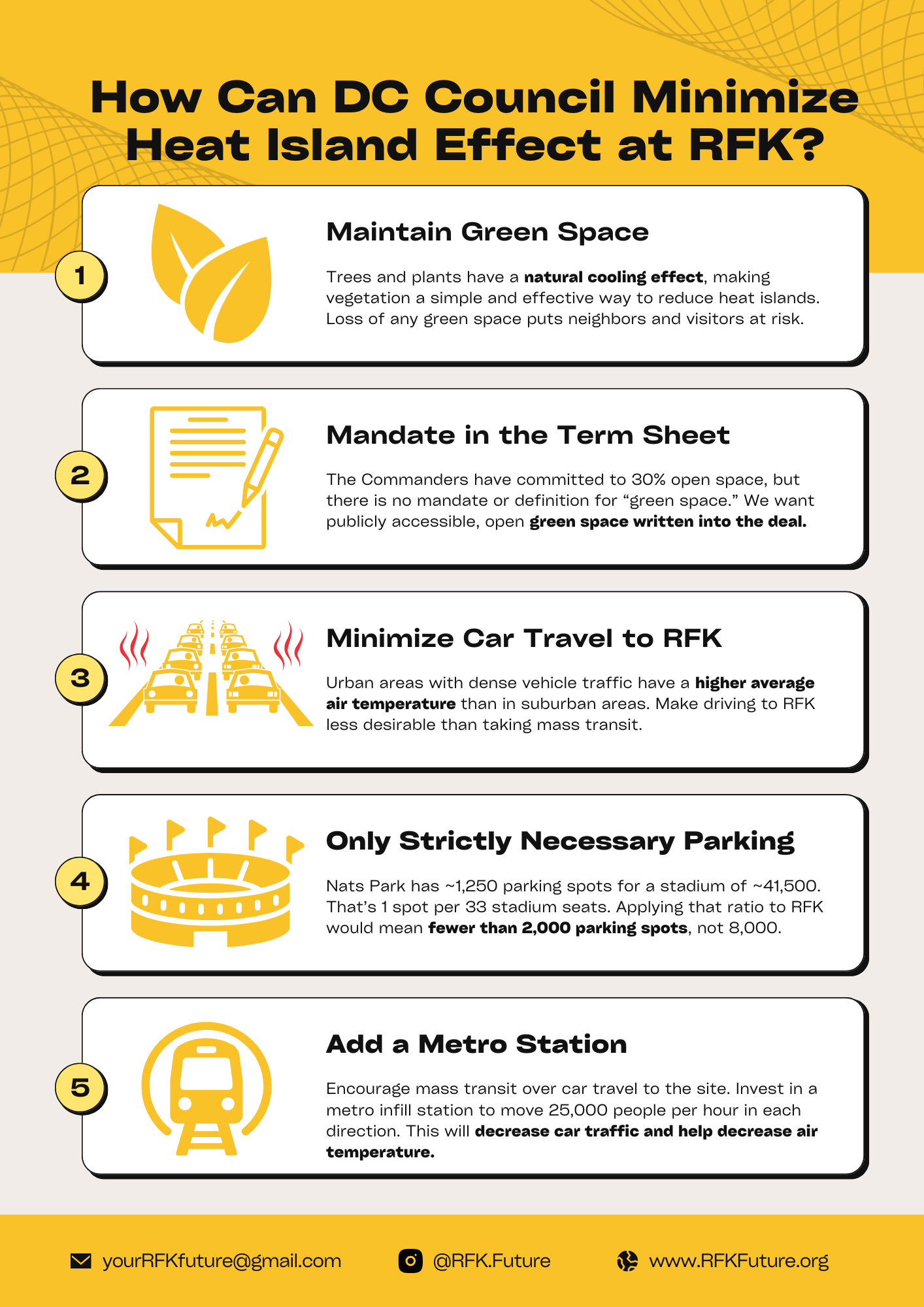
The easiest way to arrive should be by metro, bus, bike, or own two feet.
Frequent and electrified transit service to the site must be planned to replace the DC Streetcar.
Best practices for “Complete Streets” design should be applied to prioritize expanding and improving bicycle infrastructure and ensuring pedestrian-friendly circulation throughout the site.
The site should include ample bike racks and Capital Bikeshare stations to support and encourage cycling.
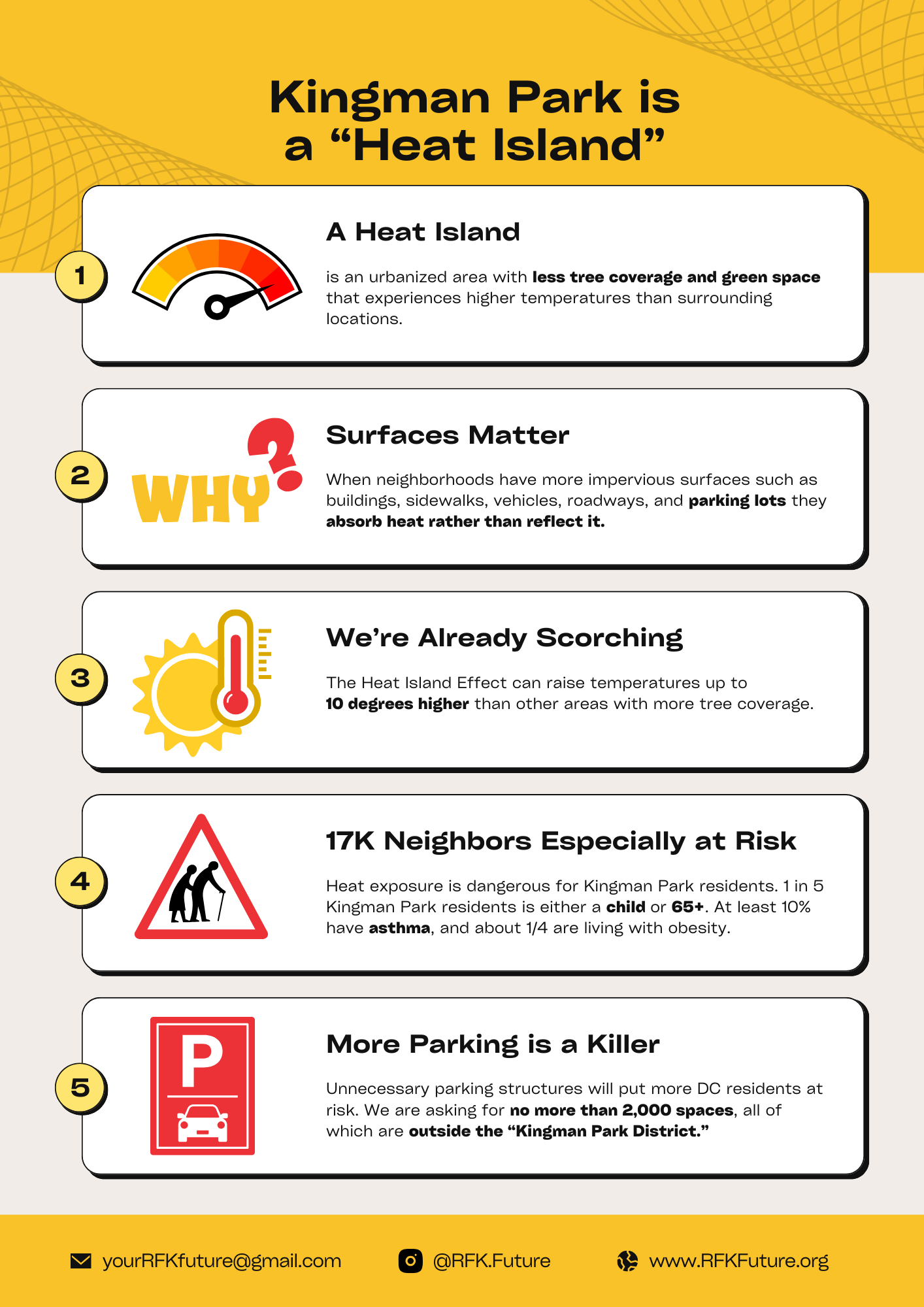
On-site parking should be minimal. Instead, investments must ensure that Metrorail can fully serve the site and is equipped to move the majority of attendees traveling to and from events.
All parking provided on the site must, at a minimum, comply with the requirements for EV-installed and EV-ready spaces as outlined in the DC’s electric vehicle charging law.
Tax and fee revenue from paid parking on the site should be collected and directed toward funding improvements to transit, cycling, and pedestrian infrastructure within and around the site.
-
Currently, there are zero commitments listed in the terms sheet to develop the site besides the stadium and parking. This development must prioritize community needs including retail and mixed use development that will bring grocery stores, pharmacies, and child care to our Wards. Before the DC Council votes on a deal, there must be specific commitments in the terms sheet to develop percentages of retail and mixed use properties that make our neighborhoods healthier and more welcoming for all every day, not just on game day.
-
There must be a comprehensive, clearly coordinated approach to public safety for the surrounding community – including a unified policing strategy, youth services and programming, crisis response, sanitation, and public amenities.
-
A meaningful partnership means investing in local culture and youth – supporting our schools, libraries, arts (and artists!), sports and recreation centers show a real commitment to our community.
-
To prevent displacement, this development must deliver truly affordable housing (not just studios and one-bedroom apartments), protect local residents from rising costs, and offer pathways to homeownership.